RV Pads
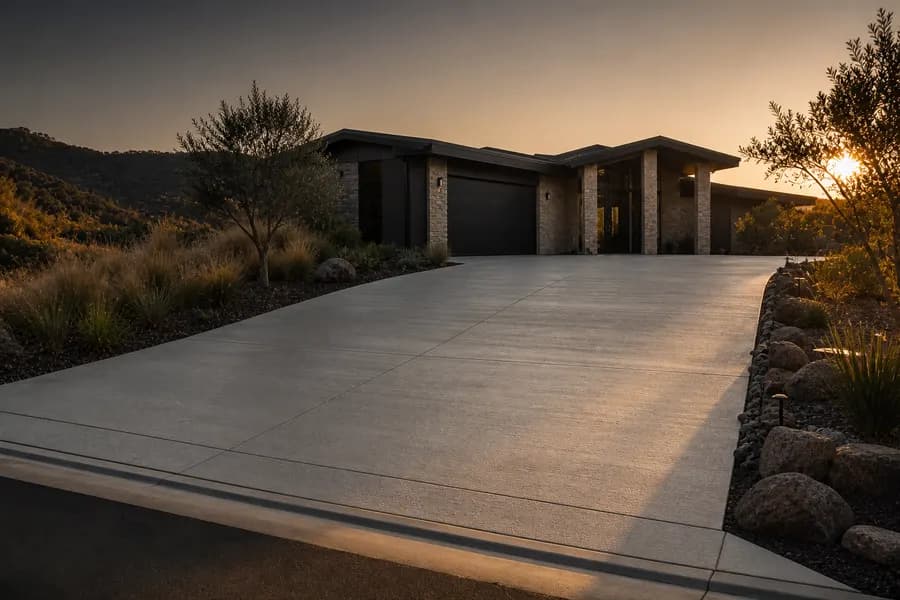
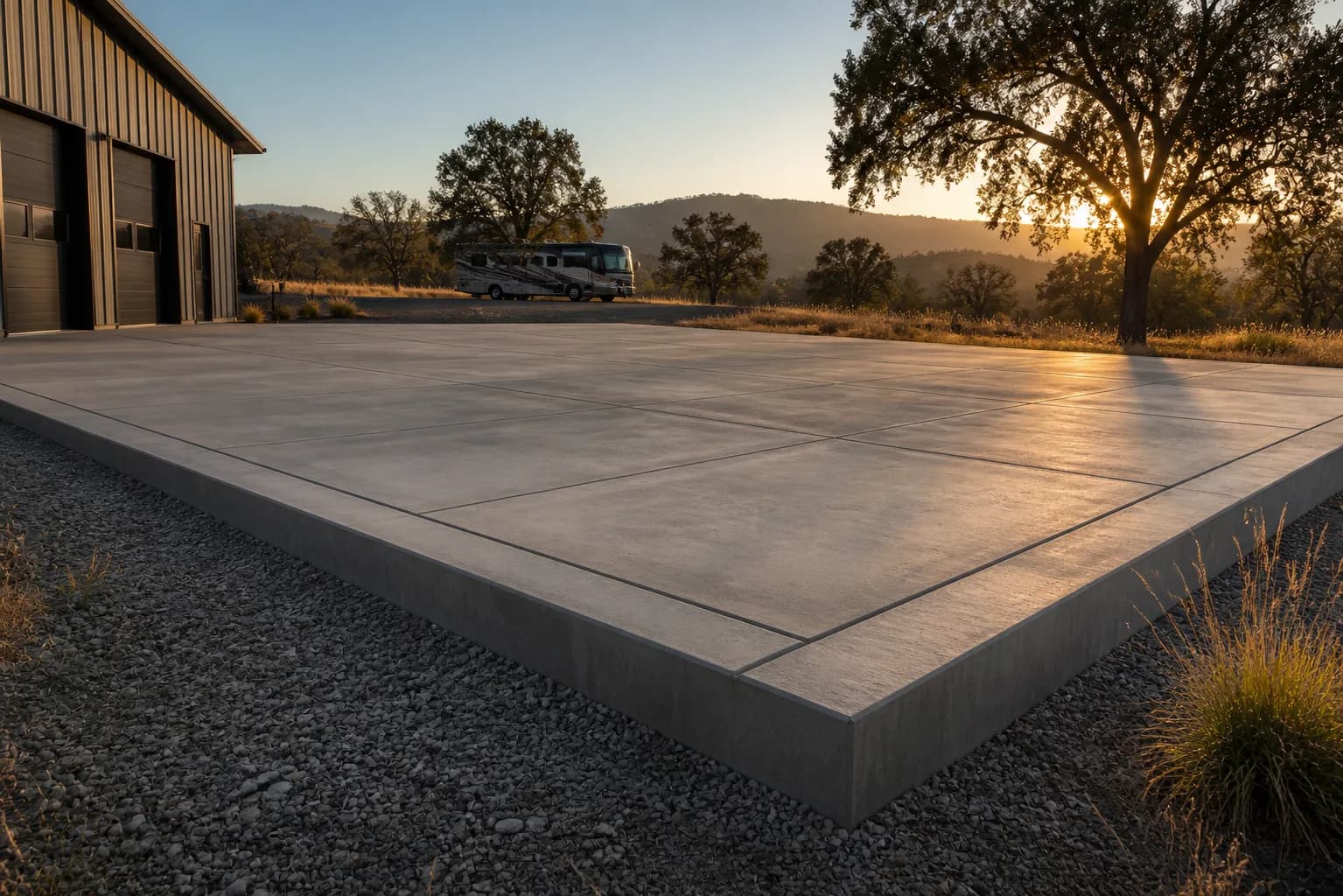
An RV does not drive across a pad. It parks on it and stays there. That is the whole difference between this and a driveway — a driveway carries weight that rolls over and moves on, and a pad carries the same weight standing still, in the same few spots, for months at a time.
What's Included
- Sizing the pad to the actual rig, plus room to open doors, run slide-outs and walk around it
- Base preparation and compaction for sustained static load
- A thicker section and more reinforcement than standard driveway flatwork
- Grading so the pad drains and the rig sits level
- Working around existing power, water and septic access
Common Projects
- New RV and fifth-wheel parking pads
- Boat and equipment trailer pads
- Pads with adjacent hookups or utility access
- Replacing gravel or asphalt parking that has settled or rutted
What Matters Most
Weight that never moves behaves differently from weight that does. A loaded rig puts most of itself onto a handful of tires plus a tongue jack and stabilizers, and those jacks concentrate thousands of pounds onto a few square inches. Ground under a sustained load also keeps consolidating long after the load goes on, which is why gravel pads that seemed fine for a season end up with ruts and low spots. Level matters more than people expect, too — a rig that is not sitting level can give trouble with doors, slide-outs and absorption fridges, so finished grade is part of the job rather than an afterthought.
Sizing and reinforcing for sustained static weight is a different calculation than a driveway that sees rolling traffic, and the honest answer is that most of the outcome is decided below the concrete. A properly compacted base under a correctly specified slab will outlast a thick slab poured over ground that was never prepared for the load.
RV Pads FAQs
How big should an RV pad be?
Start from the rig, not from a standard size. Length is the coach plus the tongue or hitch, and width needs room to open the door, run the slide-outs and still walk around it. Getting the actual dimensions of what will park there is the first question on site.
How is an RV pad different from a driveway?
A driveway is built for rolling loads that spread across a moving contact patch. A pad is built for static loads that sit in fixed positions for months, including jack stands that concentrate a lot of weight onto very little area. That usually means a thicker section, more reinforcement, and more attention to the compacted base underneath.
Do I still need pads under the stabilizer jacks?
On a properly built slab the jacks are landing on concrete rather than dirt, which is the main thing. Jack pads or blocks still help spread the load and protect the surface, and they are cheap insurance on a new pour.
Can a pad be built around existing utility hookups?
Yes. Working around existing electrical, water and septic access is normal, and it is worth locating everything before any forming starts rather than finding it mid-pour.
Can you replace a gravel parking area with concrete?
Often, and the gravel usually tells you something useful first. Where it has rutted or settled shows exactly where the ground was not carrying the load, which informs the base prep rather than being an obstacle to it.