
Concrete Contractor Serving Shasta Lake, CA
The city of Shasta Lake sits north of Redding at 807 feet — noticeably higher than the valley floor, and the terrain shows it. Slope and drainage drive most of the concrete work here.
Shasta Lake sits at 807 feet, a few hundred above the valley floor, near the lake and dam it's named for. The elevation isn't the interesting part — the terrain that comes with it is.
- County
- Shasta County
- Elevation
- 807 ft
- Climate
- Hot-summer valley
What Shasta Lake Asks of Concrete
Hillside lots change the job. Flat ground lets you decide where a slab goes; sloped ground decides for you. The work becomes grading, stepped elevations, and retaining before it becomes flatwork — and often the retaining wall is the actual project with the slab as a consequence.
Water is the other half. On a slope, runoff has speed and a direction, and it will find the lowest path whether or not anyone planned one. Concrete placed without settling that question first gets undermined at the downhill edge.
Summers still run valley-hot here, into the 90s and above, so hot-weather placement still applies — early pours and managed curing.
Details That Change the Job
Boats, trailers and RVs
A lake town parks lake things. Pads sized and reinforced for a boat trailer or an RV are a routine ask here, and they want a heavier section than a car parking area.
Retaining before flatwork
On a graded lot, the wall usually has to exist before the slab makes sense. Sequencing that correctly saves doing part of it twice.
Just north of home base
Close enough to Redding that access and scheduling are straightforward, which matters on jobs that need more than one visit.
Services Available in Shasta Lake, CA
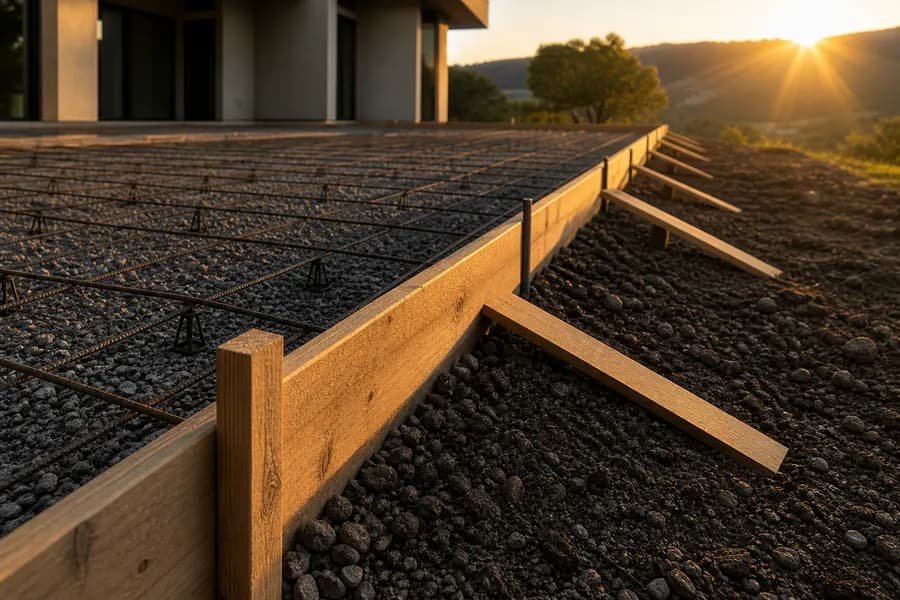
Retaining Walls
Holding back a slope, built to actually hold.
Learn more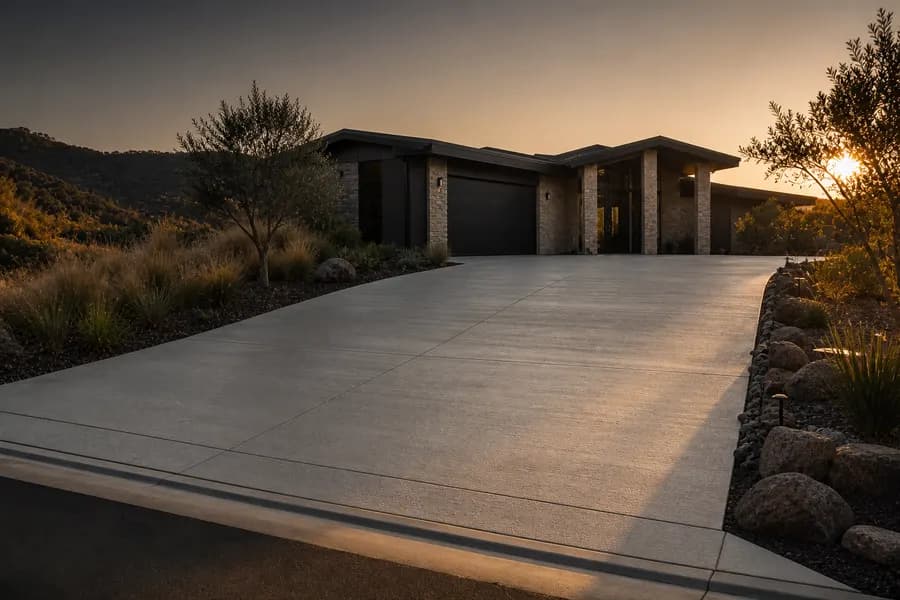
Concrete Driveways
A driveway that handles daily use and still looks right in twenty years.
Learn more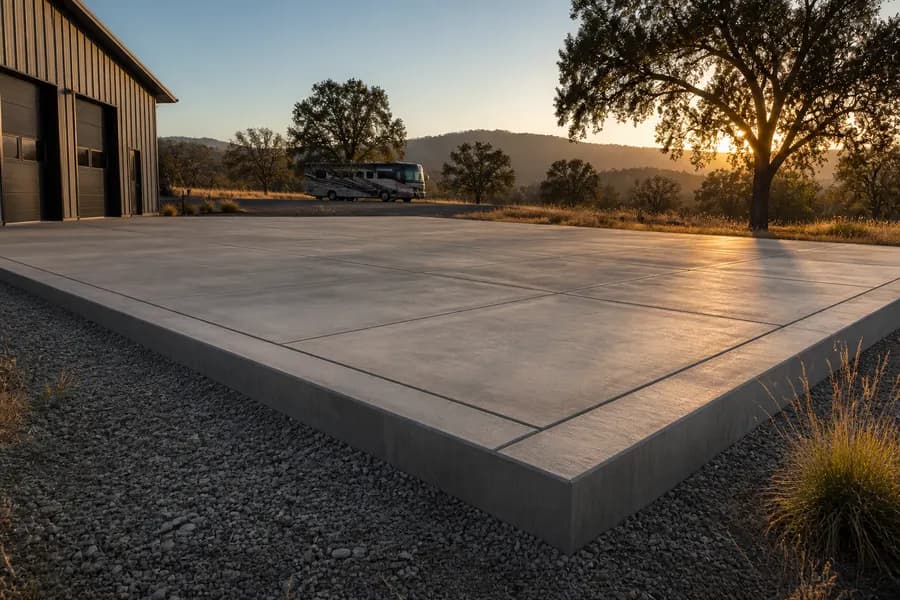
RV Pads
A stable, level pad built for the weight of an RV.
Learn more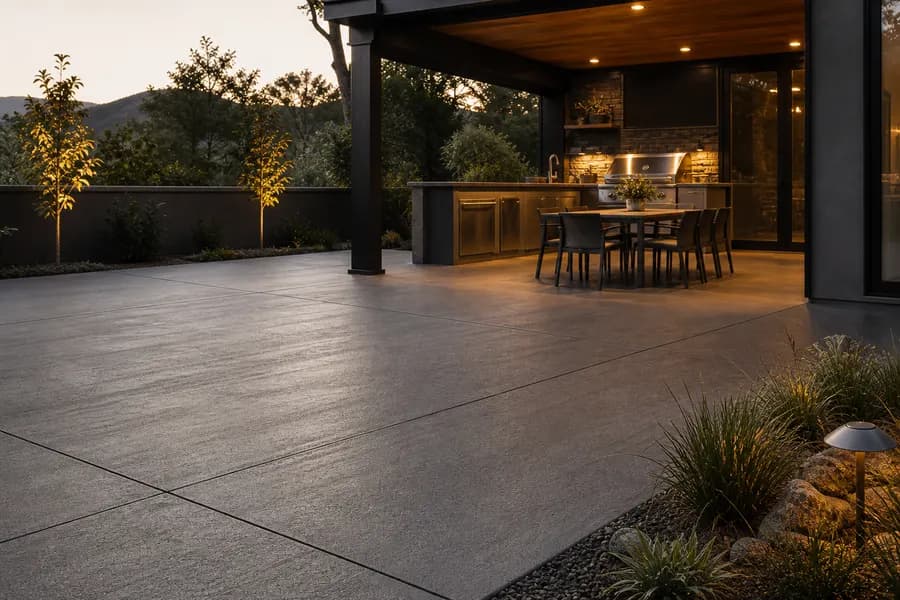
Concrete Patios
Outdoor living space built to be used, not just looked at.
Learn more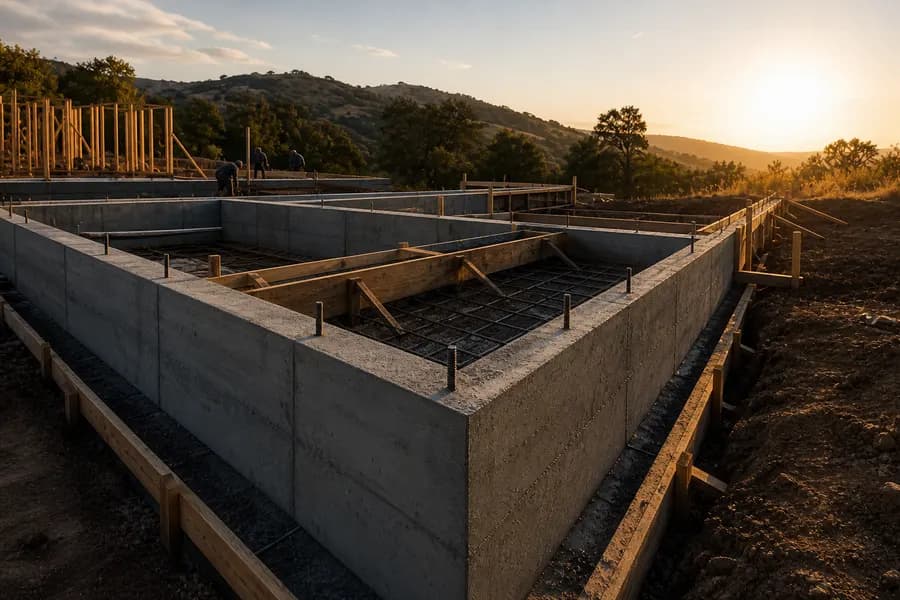
Foundations
The part of the job nobody sees — and the part that matters most.
Learn more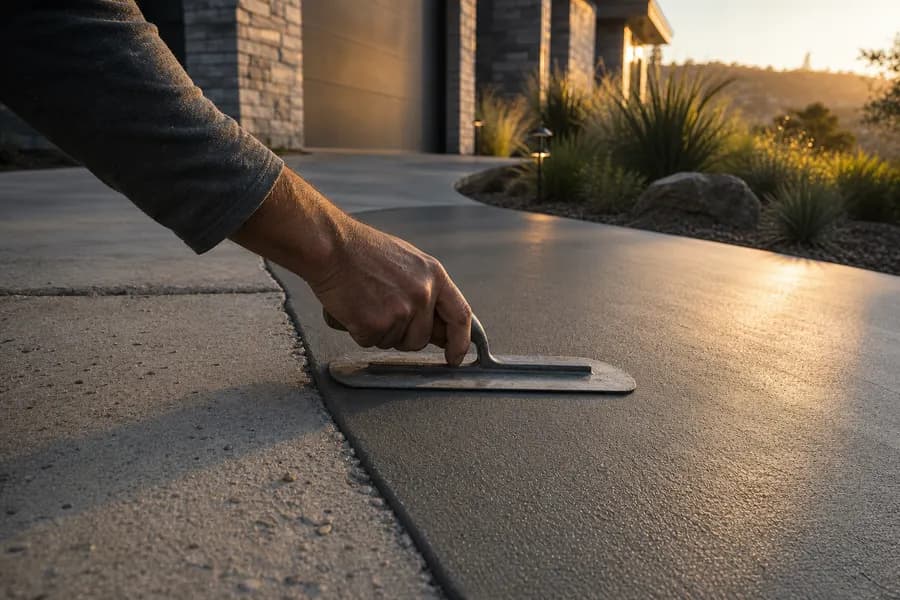
Concrete Repair & Replacement
Fixing what's cracked, sunken, or past its life — done right this time.
Learn moreConcrete in Shasta Lake — FAQs
Can you build on a sloped lot?
Yes — it's most of what the terrain here offers. Sloped work usually combines grading, retaining and flatwork, and the order those happen in is part of the plan rather than an afterthought.
Do I need a retaining wall or just a thicker slab?
Different problems. A retaining wall holds ground back; a thicker slab carries load. If the ground above or below the slab wants to move, thickness won't solve it. That's a look-at-the-property question.
How big should an RV or boat pad be?
Size follows the rig plus room to walk around it and open doors, and the section follows the weight. A loaded RV concentrates far more weight than a car, so both dimensions and thickness get decided from the actual vehicle.