
Concrete Contractor Serving Mount Shasta, CA
Mount Shasta sits at 3,586 feet in Siskiyou County and takes around 103 inches of snow a year, with January lows averaging 27°F. Concrete that freezes and thaws all winter is a different specification from concrete poured on the valley floor — and getting that wrong is what destroys mountain flatwork.
Mount Shasta is not a colder version of Redding. At 3,586 feet, with roughly 103 inches of snow a year and January lows averaging 27°F, it is a genuinely different concrete problem — and the difference is not optional.
- County
- Siskiyou County
- Elevation
- 3,586 ft
- Climate
- Freeze-thaw
What Mount Shasta Asks of Concrete
Concrete here freezes and thaws repeatedly every winter. Water that has soaked into the surface expands as it freezes, pushing outward from inside the slab. Do that a few dozen times a season and the surface begins to scale and flake away — freeze-thaw damage, and it is the single most common way mountain flatwork fails.
The standard defense is air-entrained concrete: microscopic air bubbles deliberately mixed in, giving freezing water somewhere to expand into instead of against the surrounding paste. It is specified for freeze-thaw climates, and it is not what a Redding driveway needs. Concrete ordered for a valley pour and placed up here is being asked to do a job it wasn't mixed for.
Timing and drainage do the rest. New concrete needs to reach strength before it meets its first hard freeze, which narrows the pouring season at this elevation. And meltwater has to be graded away rather than allowed to pond and refreeze on the slab, because standing water is what feeds the freeze-thaw cycle in the first place.
Details That Change the Job
Skip the deicing salt the first winter
Deicers are hard on new concrete, and hardest of all on a slab in its first season. Sand gives traction without chemically attacking a surface that hasn't fully matured. It is the cheapest thing an owner can do to protect a new pour up here.
Snow load and where it goes
Roughly 103 inches a year has to end up somewhere. Where snow gets pushed, piled and melted is worth deciding while the slab is still being laid out — a pad that becomes the snow dump behaves differently from one that doesn't.
It's a trip north
This is the far northern end of the service area, well up I-5 from Redding. The work travels, but scheduling gets planned properly rather than fitted around a valley job.
Services Available in Mount Shasta, CA
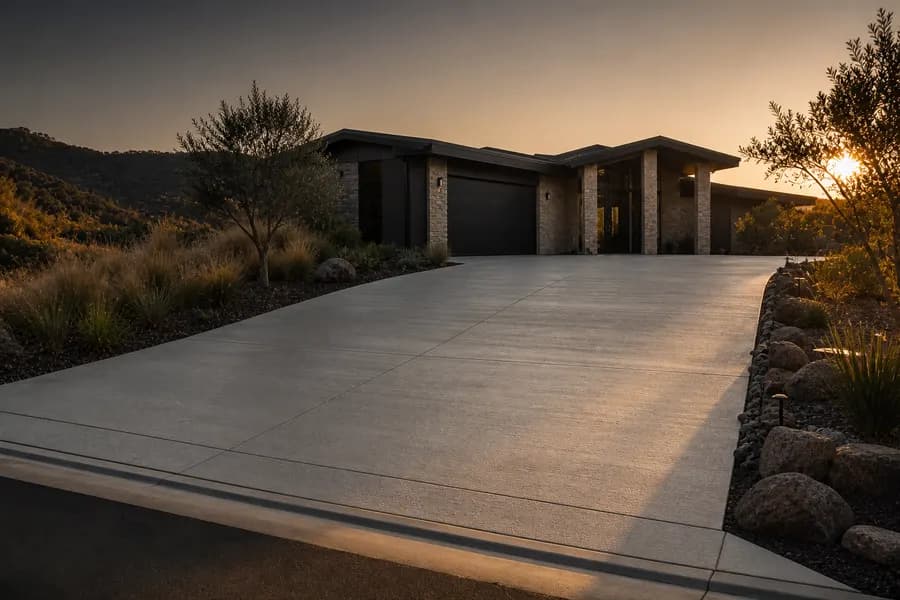
Concrete Driveways
A driveway that handles daily use and still looks right in twenty years.
Learn more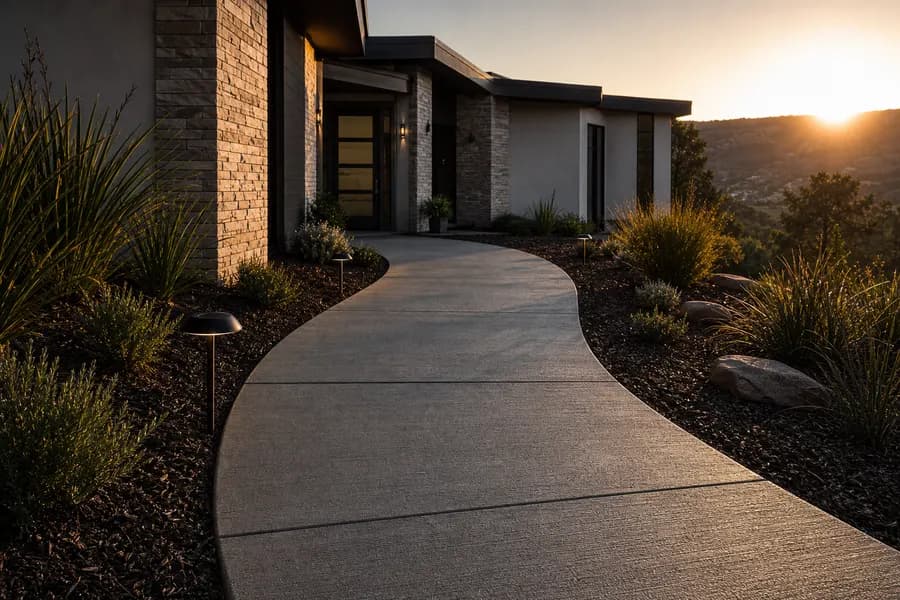
Walkways & Sidewalks
Clean, level paths that tie a property together.
Learn more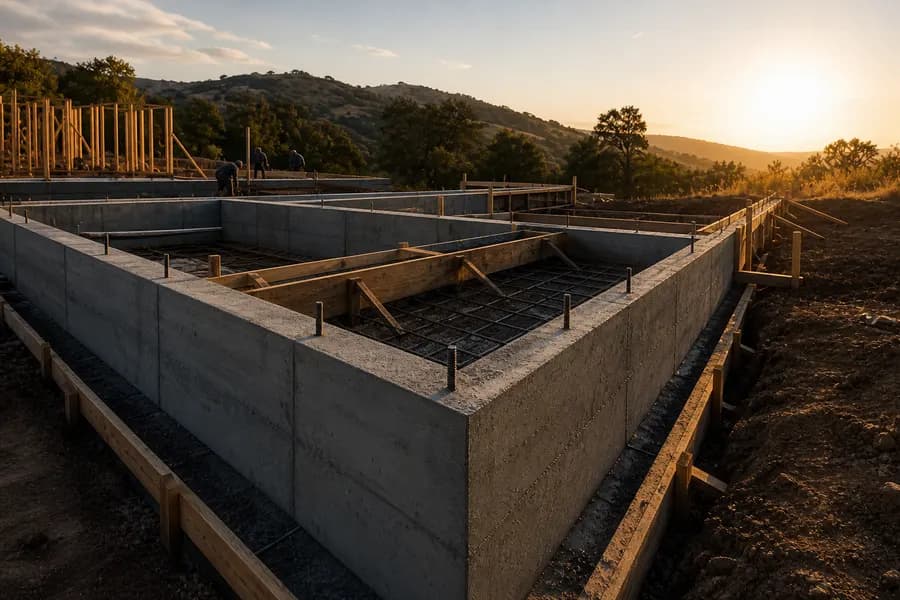
Foundations
The part of the job nobody sees — and the part that matters most.
Learn more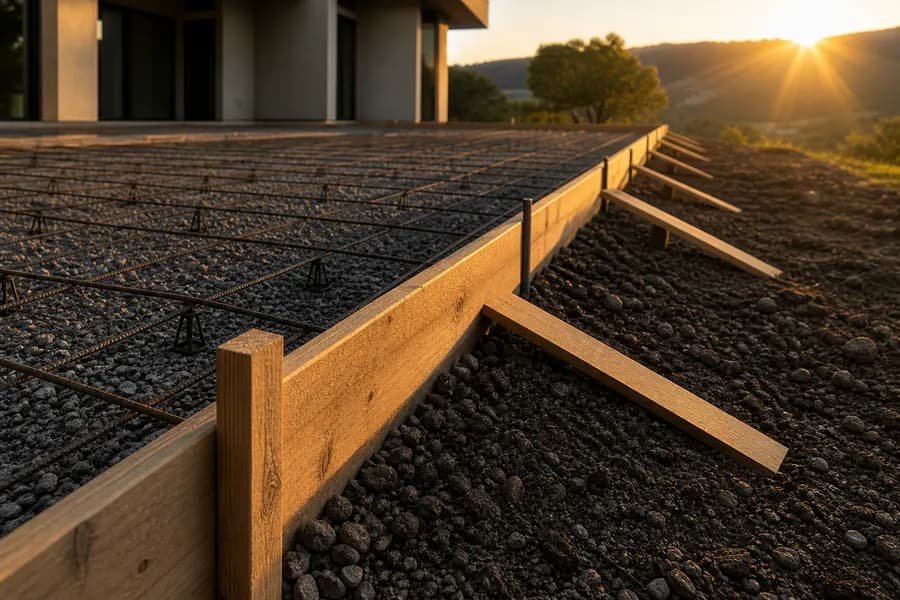
Retaining Walls
Holding back a slope, built to actually hold.
Learn more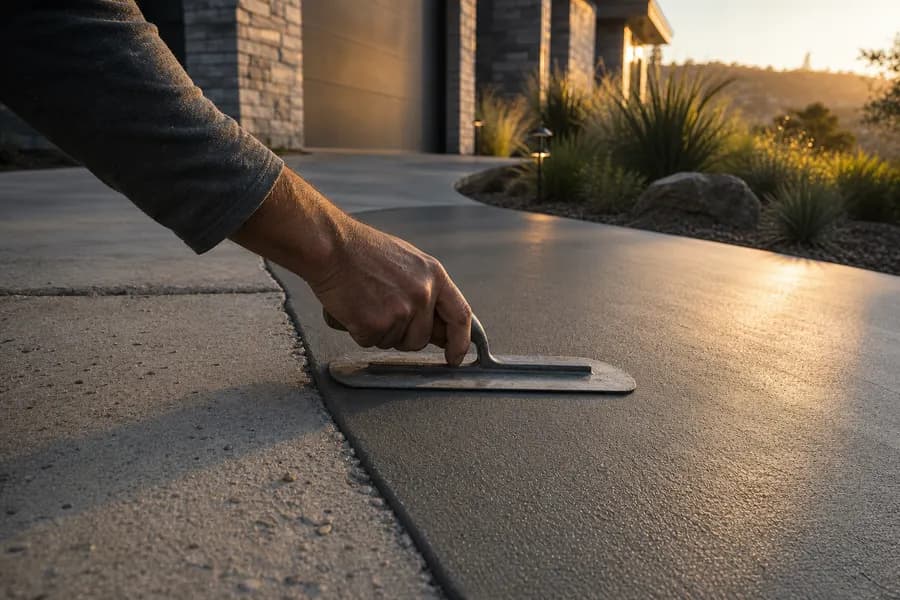
Concrete Repair & Replacement
Fixing what's cracked, sunken, or past its life — done right this time.
Learn more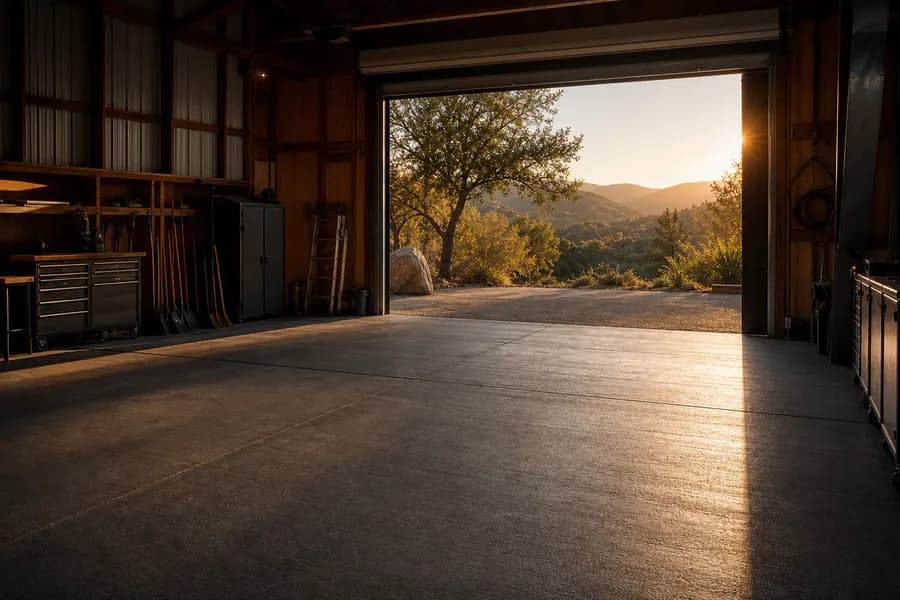
Garage & Shop Slabs
A flat, solid floor for vehicles, tools, and equipment.
Learn moreConcrete in Mount Shasta — FAQs
Is concrete for Mount Shasta different from concrete in Redding?
It should be. Freeze-thaw climates call for air-entrained concrete, where deliberate microscopic air voids give freezing water room to expand. A valley mix placed at this elevation is more vulnerable to surface scaling over its first several winters. It's a specification decided when the concrete is ordered, not something added later.
When can concrete be poured at this elevation?
The season is shorter than the valley's. New concrete needs to gain strength before its first hard freeze, so late-season pours need the forecast taken seriously and, sometimes, protection while curing. Planning the work earlier in the year avoids the problem entirely.
Why is my existing concrete flaking at the surface?
Surface scaling like that is the classic freeze-thaw signature, and deicing salt usually accelerates it. Whether it can be resurfaced or needs replacing depends on how deep it goes and whether the slab underneath is still sound.