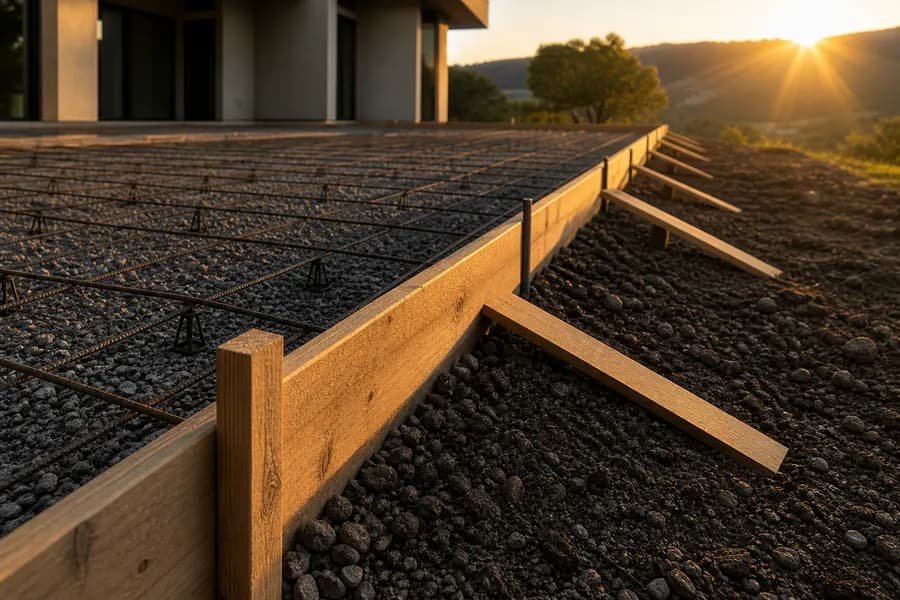
Foundations
A foundation’s job is to take the weight of everything above it and spread it across enough ground that the soil underneath can actually carry it. Concrete strength is rarely what decides whether that works. The dirt usually is.
What's Included
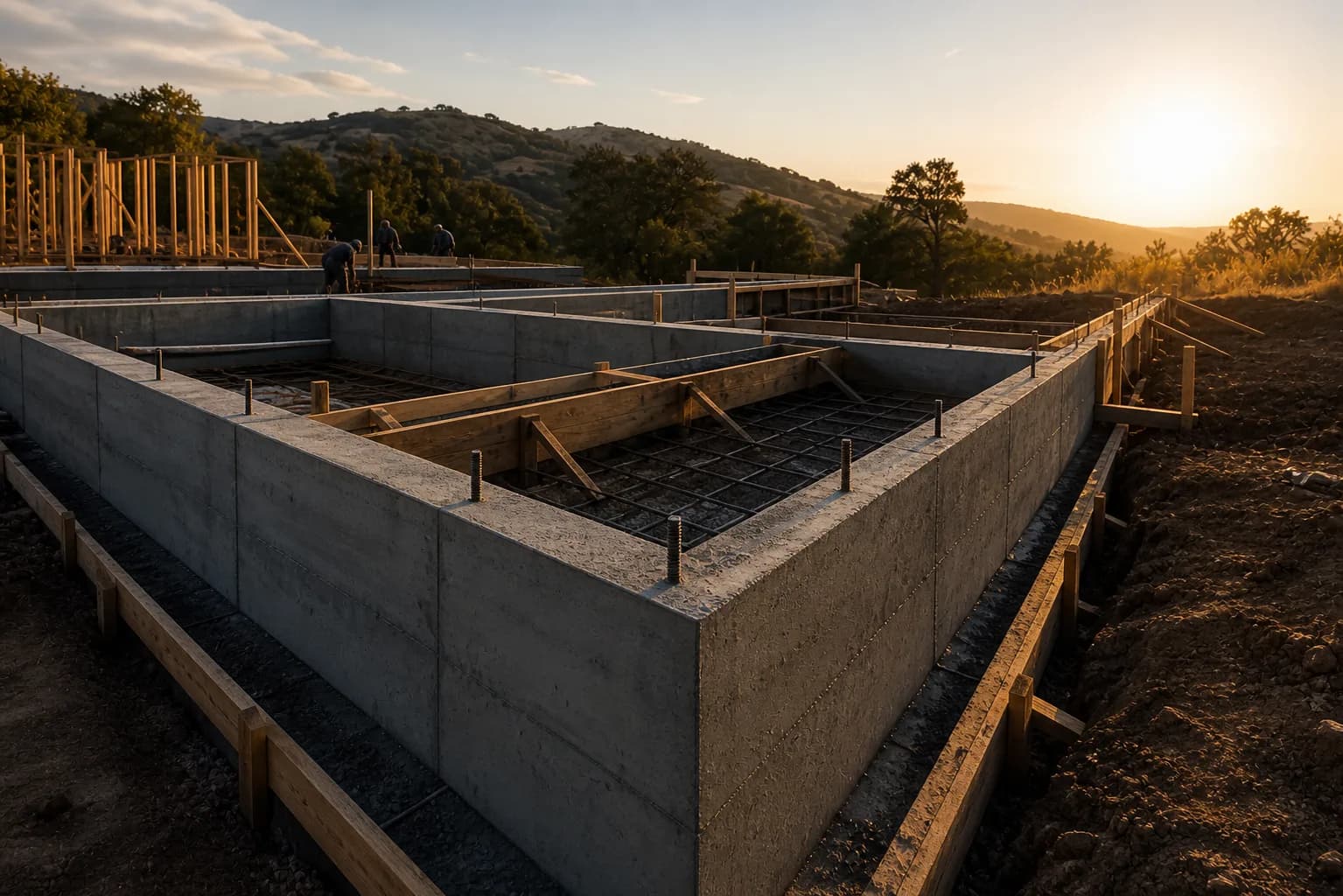
- Excavation to the required bearing depth
- Footing and stem wall forming
- Reinforcement placed and lapped to the structural drawings
- Anchor bolts and hardware set before the concrete sets, not after
- Holding the pour for inspection where the job calls for it
- Curing to strength before load-bearing work continues on top
Common Projects
- New home and structure foundations
- Shop, barn and outbuilding foundations
- Stem wall and footing work on sloped or stepped sites
- Additions tying into an existing foundation
What Matters Most
Two things set the depth and width of a footing, and neither of them is the concrete. The first is how much load the soil can carry — spread the weight over too little area and the building settles no matter how strong the mix was. The second is frost depth, which is why this changes across the service area: a footing at Redding’s elevation is a different depth than one at Mount Shasta or Weed, where the ground freezes every winter. Reinforcement position matters just as much. Rebar sitting in the wrong part of the section does close to nothing, and once the concrete is placed nobody can see where it ended up.
Structural concrete is a different discipline from flatwork. A patio that comes out slightly off is a patio; a footing that comes out slightly off sits under a building for the next fifty years. Where an engineer’s drawings specify a detail, the job is to build exactly that — knowing which details are genuinely non-negotiable, and holding the pour until they are right, is what decades on the tools actually buys you.
Foundations FAQs
Do you work from a structural engineer’s plans?
Yes. Foundation work is poured to the specifications provided for the structure going on top. Where plans exist, they govern — the job is to build them accurately rather than improvise around them.
What actually determines how deep a footing goes?
Soil bearing capacity and frost depth, plus whatever the plans and local code require for the structure. Frost depth is the one that changes most across Northern California — the valley floor and the Siskiyou County towns are not the same answer.
Can you repair a settling or cracked foundation?
It gets evaluated on site, because the right fix depends entirely on what is causing the movement. Concrete that cracked because the ground beneath it shifted is a soil problem showing up in the concrete, and patching the surface without addressing that just buys time.
How long before we can frame on it?
Concrete keeps gaining strength for weeks — 28 days is the standard test age — but framing normally starts once the design strength for that stage is reached rather than at 28 days. The schedule comes off the plans and the conditions during the cure.
Does hot weather affect a foundation pour?
It affects every pour in this region. Placing in high heat means the surface can dry faster than the concrete below is ready for, so pours start early and curing is managed rather than left to the weather. On structural work that discipline matters more, not less.